App preview
Inside Trade Master 9.
Trade Master 9 supports the advanced Market Depth, alongside the netting system adopted on exchange markets.
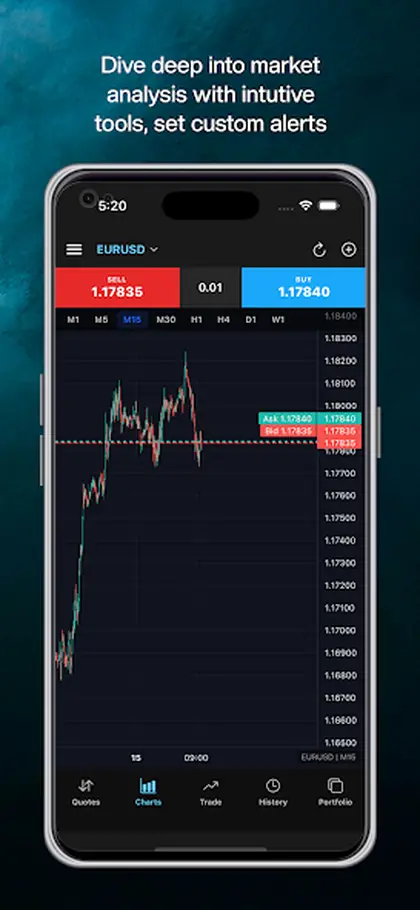
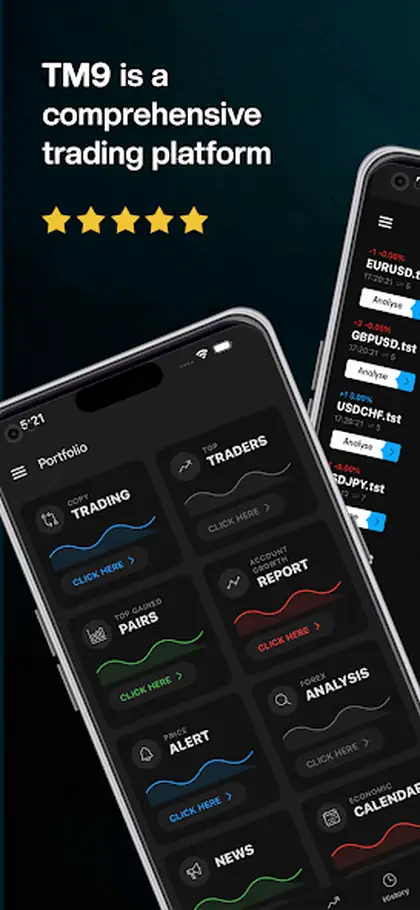
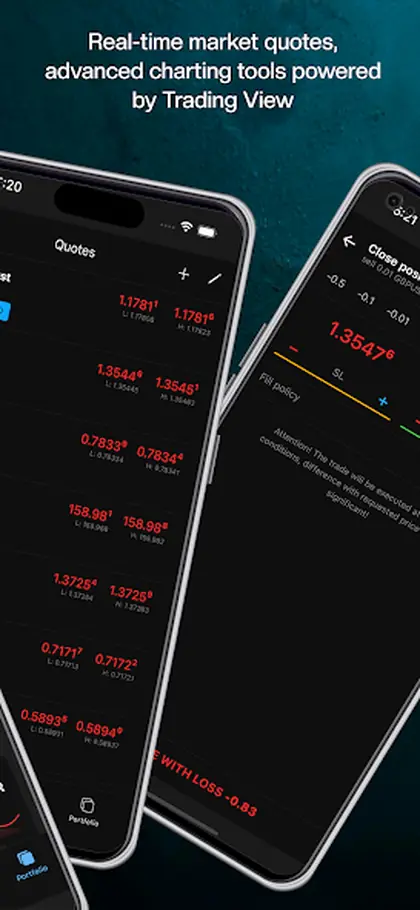
Seeing the book behind a price changes how operations in the forex and exchange markets are placed from this trading mobile app.
Trade Master 9 supports the advanced Market Depth, alongside the netting system adopted on exchange markets.
Trade Master 9 supports the advanced Market Depth, alongside the netting system adopted on exchange markets.
The advanced Market Depth in Trade Master 9 shows resting orders and supports exchange-style trading.
Market Depth displays the orders resting around the current price, so you can see the liquidity available on each side rather than a single best bid and ask.
Because the platform accounts for orders and trades separately, orders placed from the depth window stay readable in your order list and history.
Market Depth is most associated with exchange markets and the netting system, both of which the platform supports directly.
Three short notes on how this works day to day.
Traders who scalp or work large orders use the book to decide not just direction but placement — whether to join a level, sit behind it, or cross the spread. The same information also explains slippage after the fact.
Depth data comes from the venue through your broker, so the amount of the book you see depends on their feed. The platform displays what is supplied rather than generating it.
This page is for exchange traders and anyone working larger orders, where placement inside the spread matters as much as the entry itself.
How trading system sits inside the Trade Master 9 platform.
The platform delivers Market Depth and separate accounting of orders and trades, supporting both the traditional netting system and the hedging option system. Four execution modes — Instant, Request, Market and Exchange — cover different trading objectives, and every order type is available: 2 market order types, 6 pending order types, 2 stop orders and trailing stop.
TM9 is a software development company and does not provide investment or brokerage services. The platform supplies the trading terminals, analysis tools and automation; your broker holds the funds, sets spreads and leverage, and executes the orders the platform sends. Trading carries a real risk of loss, and signals or robots are tools rather than financial advice.
Flexible Trading System. Netting and Hedging. Order Types. Or open the Platform Guide for all 20 pages.