App preview
Inside Trade Master 9.
Mobile for managing, desktop for preparing, web for anywhere else — all on one account.
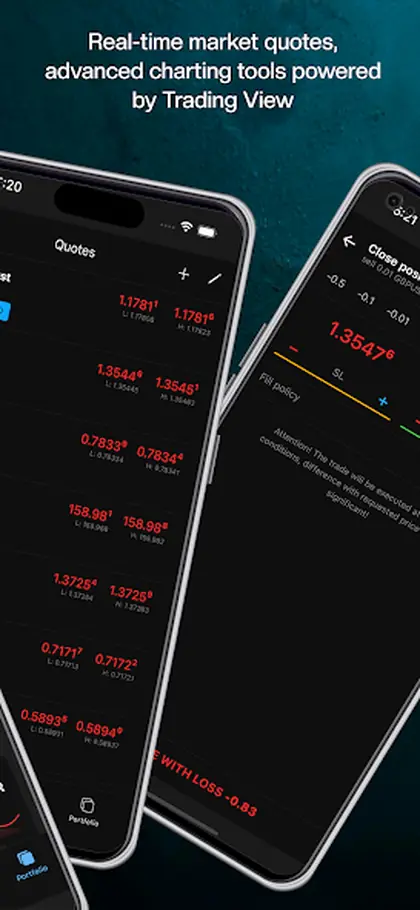
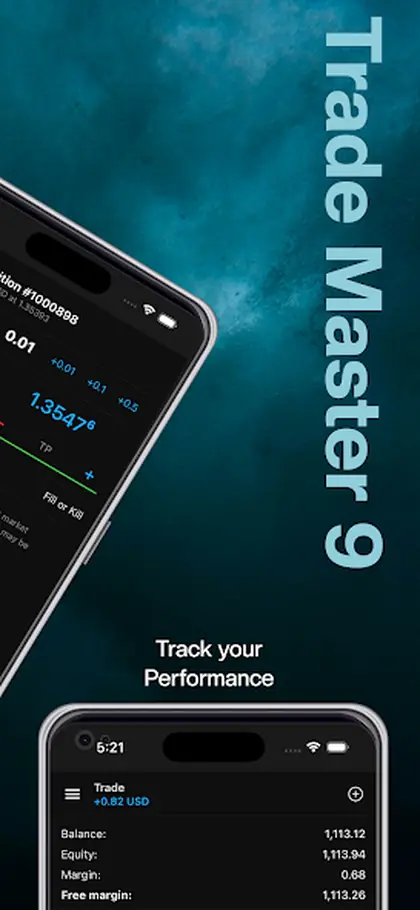
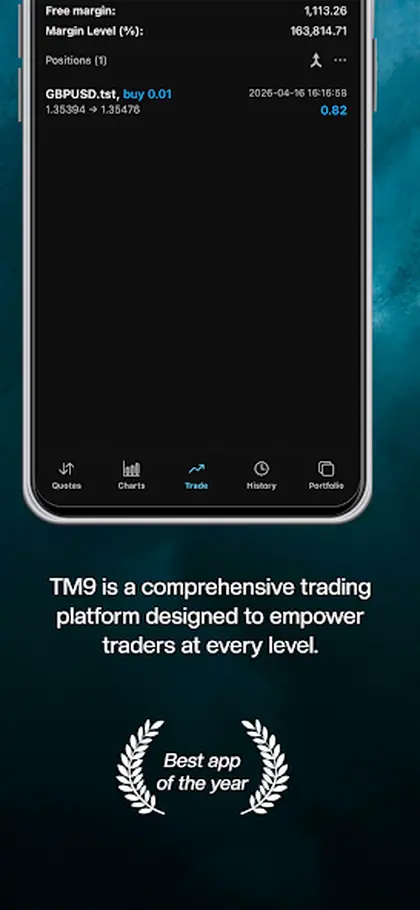
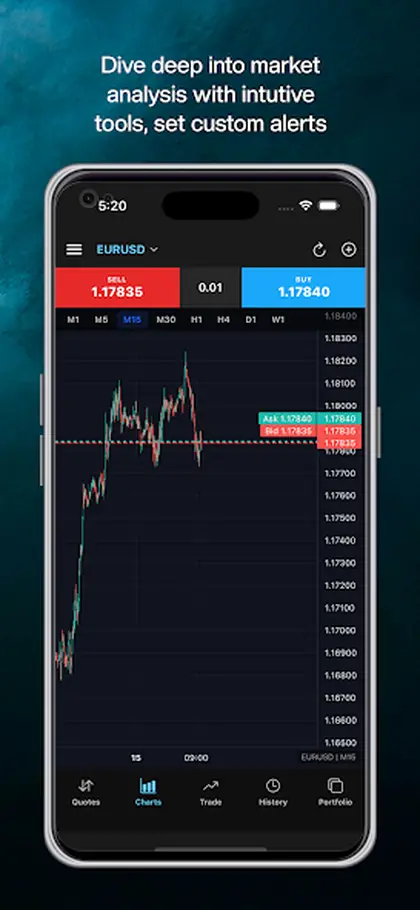
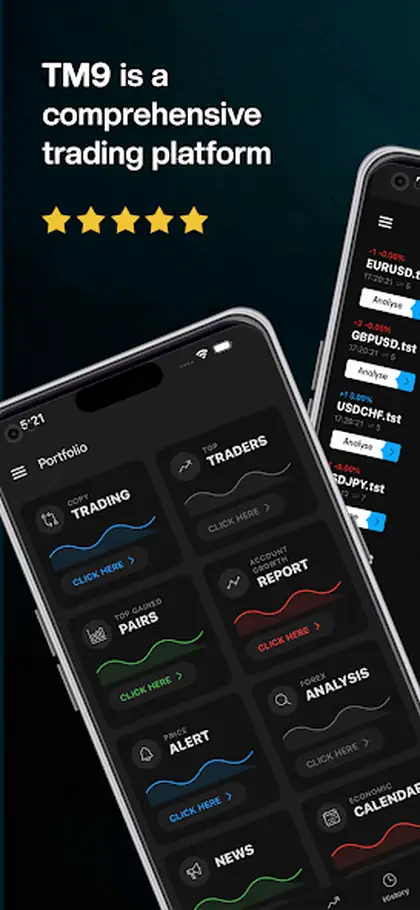
A trading mobile app is one of three ways to run Forex and exchange market operations in TM9, and most traders use at least two.
Mobile for managing, desktop for preparing, web for anywhere else — all on one account.
TM9 gives you three ways to work: a trading mobile app for operations in the Forex and exchange markets downloaded from the Play Store or App Store, a Web Terminal that runs in any browser, and a full desktop terminal. Most traders end up using at least two, and the question is not which is best but which suits which moment.
The phone is for managing. Positions get adjusted between meetings, alerts arrive while you are walking, a trailing stop gets moved on a train. The full trading function is there — charts, studies, order placement, history — so nothing forces you back to a desk, and biometric sign-in keeps it quick enough to check in a dozen times a day.
The desktop terminal is for preparing. Multi-chart layouts, drawing levels across several timeframes, reviewing a week of trades — all of it is faster on a large screen with a keyboard. It is also the right host for automated strategies, because an trading robot that must run continuously needs a terminal that stays open rather than a browser tab.
The Web Terminal covers everything else: a borrowed laptop, a locked-down work machine, an unfamiliar office, a device you cannot install software on. It runs on Windows, Mac or Linux, needs only an internet connection, and shows the same account with the same open positions.
What makes the combination work is that the account carries the setup. Watchlists, chart layouts and open orders sync in real time, so moving between the three requires nothing at either end. The TM9 home page covers all of it in full detail.
Mobile for managing, desktop for preparing, web for anywhere else — all on one account.
How the TM9 mobile app, Web Terminal and desktop terminal differ, and which to use when.
Full trading function on Android and iOS, with alerts, biometric sign-in and tap-to-trade. Best for managing positions away from the desk.
Any browser on Windows, Mac or Linux, nothing to install. Best for borrowed or locked-down machines, and for a quick start.
The full-size workspace for multi-chart layouts and prepared analysis, and the better host for automated strategies that must run continuously.
Three short notes on how this works day to day.
Most traders settle into preparing on a larger screen and managing on the phone. Because watchlists, layouts and open orders sync in real time, the handover between the three needs no setup at either end.
The one real difference is automation: a browser session ends when the tab closes, so continuously running trading robots belong on the desktop terminal.
This page is for anyone deciding where to run TM9, and for traders adding a second or third device to an existing setup.
How download sits inside the Trade Master 9 platform.
TM9 2.0 is rolling out on iOS and Android, and full-fledged trading runs without a desktop computer anywhere in the picture. The mobile apps carry the full trading function, technical indicators, graphical objects, account monitoring and trading history. Where installing is not possible, the Web Platform runs the same account from any browser on Windows, Mac or Linux with only an internet connection.
TM9 is a software development company and does not provide investment or brokerage services. The platform supplies the trading terminals, analysis tools and automation; your broker holds the funds, sets spreads and leverage, and executes the orders the platform sends. Trading carries a real risk of loss, and signals or robots are tools rather than financial advice.
Download TM9 for Android. Download TM9 for iPhone. TM9 on Tablets. Or open the Platform Guide for all 77 pages.